


Today we will discuss some common questions about the Mercedes-Benz M271 engine.
The Mercedes-Benz M271 engine was produced from 2002 to 2015.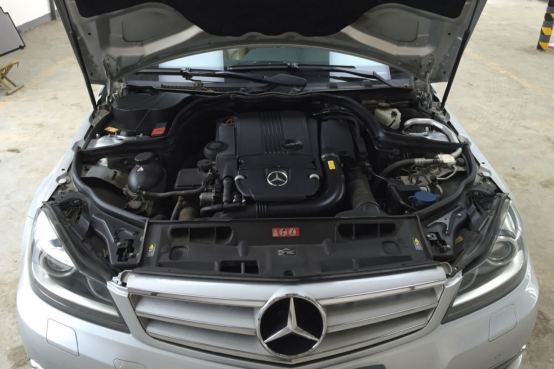
The M271 supercharged engine is divided into two phases: the first phase is the belt-driven mechanical supercharged model, which starts with the suffix "271 9" and was generally produced from 2002 to 2007; the second phase is the exhaust gas driven turbocharged engine, produced from 2008 to 2015, and its suffix starts with "M271 8". The above explains how to distinguish between the mechanical supercharged and exhaust gas driven supercharged M271 engines by their suffixes. Today, we will mainly focus on the common faults, problems encountered during the rebuilding process, and solutions for the exhaust gas driven (i.e., 271 8) engine.
Engine design is a very microscopic matter.
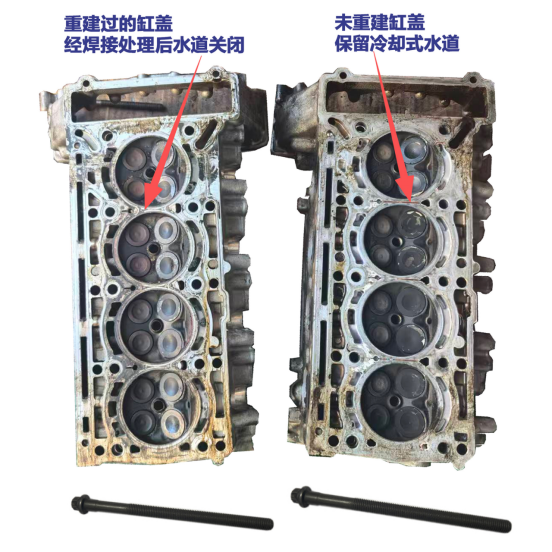
The M271 8-series engine features a structural design that combines precision and specificity. Its cylinder head cooling channels are designed to achieve precise temperature control during engine operation through efficient coolant circulation, preventing localized high temperatures from affecting operational stability. However, this design requires high levels of routine maintenance. As the engine ages, or due to improper maintenance leading to scale buildup in the coolant, the cooling channels are prone to blockage, even creating localized vacuum environments within them. Such problems directly cause localized high-temperature deformation of the engine, ultimately resulting in a blown cylinder head gasket, a typical problem in this engine series.
Increase cylinder head bolt torque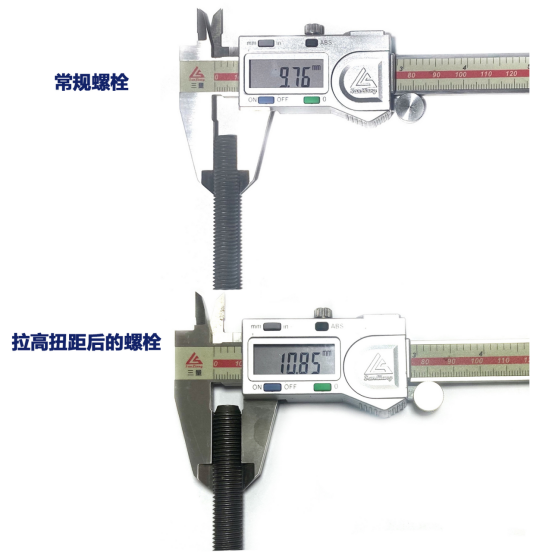
When an engine experiences problems such as a poorly sealed cylinder head gasket or slight cylinder head deformation, gaps will form at the mating surfaces of the cylinder head and cylinder block, significantly reducing sealing performance and making it highly susceptible to air leaks, coolant leaks, and combustion gas leaks, directly affecting the normal operation of the engine. By appropriately increasing the cylinder head bolt torque, the bolt preload can be increased, allowing for a tighter pressurization of the cylinder head gasket, effectively filling the gaps at the cylinder head and cylinder block mating surfaces, quickly restoring cylinder sealing performance, and resolving various leakage problems.
Currently, in China, the above methods are commonly used during engine reconstruction: welding and sealing the rear water passages of the cylinder head, machining limiting steps to repair cylinder liner settlement, appropriately increasing the cylinder head bolt torque to enhance sealing, and compensating for minor deformations, thereby solving air and coolant leakage problems and improving engine durability and stability.